• About Us
  • Advertising
  • Support Us
  • Contact Us
  • Community
  • Politics
  • Art & Culture
  • Local Business
  • Environment
Facebook Twitter Instagram LinkedIn
The Tawny Frogmouth
  • About Us
  • Advertising
  • Support Us
  • Contact Us
  • Community
  • Politics
  • Art & Culture
  • Local Business
  • Environment
The Tawny Frogmouth
Home » Online Articles » Credit where it’s dune
Environment

Credit where it’s dune

Liam CarrollBy Liam CarrollJune 24, 20263 Mins Read
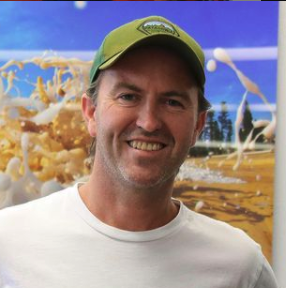
Professor Andrew Short OAM and Associate Professor Mitchell Harley
Professor Andrew Short OAM and Associate Professor Mitchell Harley, Sandmen through and through

In coastal management circles, Professor Andrew Short OAM is a celebrity, Australia’s Professor of Beaches. And in a country girt by sea and blessed by 12,500 beaches, Professor Short, of Sydney University’s School of Geosciences, has been to all of them to map, study, and categorise the lot. But it’s his dedication to the Narrabeen to Collaroy stretch we’re here to celebrate.

“I returned to Australia in 1975,” says Professor Andy. “I’d been living in America, and had studied beaches in Hawaii, Alaska, Florida, Brazil, from fine sand to cobble stone. And at that time in the literature there was no understanding of the range of the beaches.

“A beach has three simple ingredients. Sand. Waves. Tides. But the variety those three ingredients can produce is incredibly wide. And monitoring a beach through time could allow for better understanding of the entire range of the beach’s movements.”

In 1976, Andy decided to start monitoring the 3.6 kilometre Narrabeen to Collaroy stretch every day. He had 14 locations set up, and deployed “The Emery Method”, the technique he’d learnt in Alaska.

Glory Days, 1980. Andy Short at Fishermans with his trusty Emery pole.

What is The Emery Method? “It’s fool proof”, says Andy. “You have two calibrated poles, a tape measure, a set benchmark, and with the two poles you get the difference in elevation and can measure and map the cross-sectional elevation – the profile – of a beach.”

For the first 18 months, Andy even did daily sketches, building an incredible time series of the beach’s movements. After 18 months, the operation was scaled back to monthly. The dedication lived on, unaware how valuable this information would become…

“I came on board in 2005,” says Associate Professor Mitchell Harley, from the University of New South Wales Water Research Laboratory. “As part of my PhD, I was offered the role to take the survey program into the future, utilising the new techniques available, which would also mean driving up and down Collaroy to Narrabeen every month on a quad bike. That sounded pretty cool.”

Mitch modernized the program with full 3D measurements made possible by quad bike missions. This was complemented by 5 cameras atop the Flight Deck building, which have taken a photo of the beach every hour for the past 20 years. Drone technology then took over, and more recently, satellites with coastal imagery dating back to the 1980s can be deployed.

This is where it really gets interesting. When data sets from modern, far more sophisticated means are matched against those from Australia’s Professor of Beaches, the difference is statistically insignificant. As Andy’s son Ben remarks, “Thanks to Dad’s data sets, those can be used to validate the new technologies, which allows for mass surveying of beaches across the planet.”

Andy and Mitch on the fabled Narrabeen to Collaroy stretch, their esteemed office, 2006.

The implications are immense. “The satellite techniques are ultimately to find better ways for humans to co-exist with dynamic shorelines,” says Mitch. “For instance, this technology developed at Narrabeen from Andy’s data was recently used in a Washington Post article about houses eroding away in North Carolina.”

Further, there’s now reliable capacity to model every beach on Earth, categorise their safety, reducing drownings, and enhanced tools for better foresight, planning and coastal management, allowing reduced need for unnecessary seawalls.

Hats off to Andy, Mitch, and so many more for 50 years commitment to the Narrabeen to Collaroy coastal monitoring program, a monumental effort that can now pay dividends for the entire world.

Conservation Issue 61
Share. Facebook Twitter LinkedIn Email

Related Posts

Get to know Dr Jessica Lai of South Steyne Medical

Positive Change

Junior Theatre Review: Spot

Comments are closed.

Stories from Past Tawnies

Be Centre’s top 5 parenting tips

September 1, 2025

After 111 Years, Manly LSC Elect Female President

August 28, 2022

A wallflower of epic proportions

October 27, 2022

The musician’s reality of working 5-9 jobs

May 30, 2022

Ella Reviews 360 ALLSTARS

May 25, 2023

Could being the Bank of Mum and Dad come back to bite you later?

September 26, 2024

Beaches salute Rock Gods Rose Tattoo

April 1, 2026

Co2efficient: Offset your direct carbon emissions in just a few minutes

December 1, 2021

Financial prisoners: When Sydney’s housing crisis traps relationships

July 24, 2025

Shark Bunker

September 26, 2025

Sydney Opera House… but in Manly

December 1, 2021

Found a baby bird? Here’s what to do…

December 1, 2021

The Last Great First

August 27, 2022

Paddle for Change: The heat is on

March 29, 2024

Bush to Bowl to understanding

June 26, 2023
Our Mag

Online Articles

Back Issues

Media

Advertising

Advertising

Media Kit

Say Hi!

Contact Us

Support Us

Tip Jar

Facebook Twitter Instagram LinkedIn
© 2026 The Tawny Frogmouth

Type above and press Enter to search. Press Esc to cancel.