

The Australian Government has committed to protect 30% of Australia’s land and seas by 2030 and a range of other commitments in its Nature Positive Plan to not only conserve nature, but repair and expand it.
This will be no mean feat to achieve. In the last 4 years alone, over 379,000 hectares of native vegetation was cleared in NSW. Only 50% of NSW threatened species are expected to survive in 100 years. We’re currently going 120km/h down the highway in the wrong direction. In parallel to the biodiversity crisis, we have a housing crisis. 14,000 households on the Northern Beaches are in rental or mortgage stress. While there are many factors that feed into this crisis, one of them is a shortfall of housing supply.
The twin crisis of nature loss and housing demand are often framed in opposition to one another, and certainly, across Sydney housing demand is putting pressure on retaining existing pockets of nature. Locally, many residents tell me about their sadness of the loss of tree canopy, bushland and landscaping in general disappearing in favour of bigger houses, smaller gardens, granny flats, and our love of concrete hardstand surfaces. How then do we embed more nature into a built-up area? While also having more homes? How do we work on both at the same time?
Here are a few ideas, but I’m interested in the community’s views on what trade-offs we’re willing to accommodate to have it all at once.
We could use underutilised Council land which has no environmental value (such as community centres or car parks) to build new mixed-use complexes, with community space on the ground floor, and housing above including affordable dwellings. If the Council takes the initiative, it can control what is built – and show how social housing can be flexible, affordable and sustainable.
In general, building upwards takes pressure off the need to build outwards into remnant pieces of nature. Council can take the lead in this by working with developers to build sustainable affordable housing on Council land. We could apply for flexibility for buildings to be taller if the trade-off is that their footprint is smaller, and they retain more trees and landscaping.
Incentivise building more sustainable houses. While our current planning rules could generally stand to impose more ambitious sustainability requirements for new buildings, to encourage supply of sustainable housing, we could grant developers bonus height or floor space for achieving high sustainability standards (such as Green Star ratings).
Keeping large canopy trees on private land should become a priority for Council. Where a large canopy tree is proposed for removal, we could condition this on the residents having to replace it with two new mature trees as a disincentive (because mature trees are very expensive) and to promote nature positive activity.
To recognise the trade-off between housing needs and retaining nature, we could offer developers a bonus to build taller buildings in local areas suited to higher density, if they pay other local residents to protect and grow new trees on private land unsuited for higher density (for example due to its bushfire risk).
I would like to hear from the community on what suggestions you have to help protect and build our environment while expanding the stock of affordable housing and expanding the tree canopy on private land.
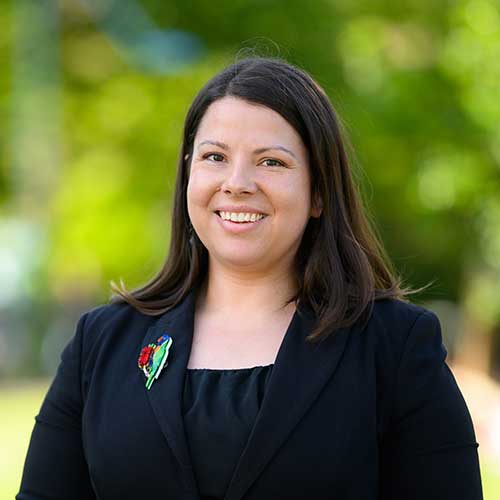
Kristyn is a Councillor for Curl Curl Ward as well as the Northern Beaches Council’s Chair of the Environment Strategic Reference Group.
Follow Kristyn Glanville on Instagram @kristyn.greens and visit manlygreens.org.au/contact-us to share your suggestions on nature positive housing options.